 Introduction
Sending a child to a boarding school is not just an academic decision. It is a life decision.
Parents often focus on curriculum, results, and reputation. But the real question is simple.
How will daily life look for the child inside the campus?
This guide breaks that clearly. From hostel life to safety, routine, and emotional adjustment, everything is covered so parents can take a confident decision.
Campus life is the complete environment where the child lives, studies, and grows.
It includes:
Think of it like a mini-world where children spend most of their time.
Most parents imagine strict schedules. That is partly true, but good schools balance discipline with freedom.
| Time | Activity |
|---|---|
| 6:00 AM | Wake up & physical activity |
| 7:30 AM | Breakfast |
| 8:30 AM – 2:00 PM | Classes |
| 3:00 PM | Sports / Activities |
| 5:30 PM | Prep / Study hour |
| 7:30 PM | Dinner |
| 8:30 PM | Light study / relaxation |
| 10:00 PM | Lights off |
This structure builds discipline without overloading the child.
This is where the real transformation happens.
But adjustment takes time.
A well-managed hostel can shape personality better than classrooms.
(Child blog will deep dive here: Hostel Life in Boarding Schools)
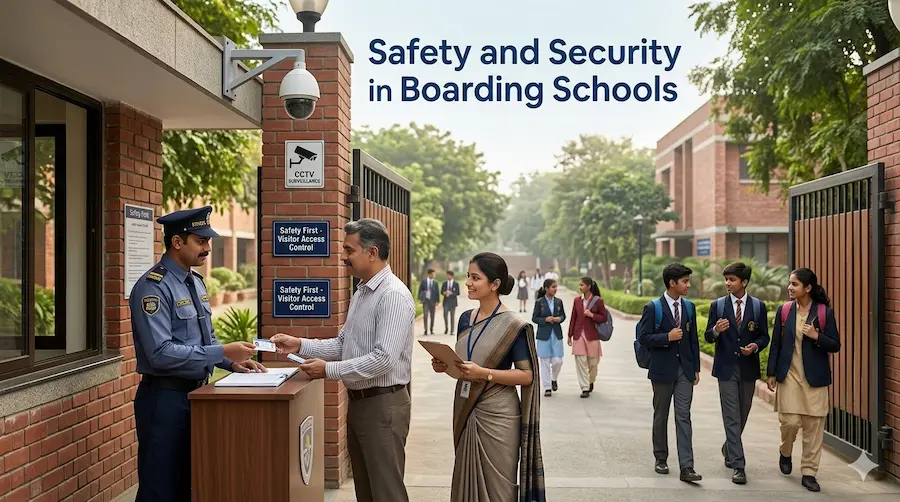
This is the biggest concern for parents.
Also check how often parents are informed.
A good school is transparent, not defensive.
(Child blog: Safety and Security in Boarding Schools)
In boarding schools, learning does not stop after class.
These build confidence and leadership.
Many parents underestimate this part. But in reality, it shapes personality more than marks.
(Child blog: Sports and Activities in Boarding Schools)
Boarding schools create a unique environment.
Children interact with peers from different backgrounds. This builds:
But initial homesickness is common.
Parents should expect 2–3 months of adjustment phase.
This is often ignored but critical.
A good school treats health as seriously as academics.
Instead of choosing based on brand name, focus on these:
Avoid these typical errors:
Real-life example:
Many parents choose a “top-ranked” school, but later shift the child because of poor hostel support.
Before finalizing, do this:
This gives real clarity beyond brochures.
This is a parent pillar guide.
For deeper understanding, detailed guides are available on:
These will help evaluate each aspect in detail before admission.
Not necessarily. Good schools balance discipline with freedom and activities.
Usually 1 to 3 months depending on personality and support system.
Yes, if the school has proper supervision, wardens, and safety systems.
No. Most top schools focus equally on sports, arts, and personality development.
Most schools allow weekly calls and periodic visits.
Independence, discipline, and confidence building.

Comments (0)
Leave a Comment