 Introduction
For most parents, safety is not just a factor.
It is the deciding factor.
But here’s the problem.
Almost every school claims “safe and secure campus.”
The real question is different.
How do you verify that safety is actually effective, not just advertised?
This guide breaks safety into practical, checkable components so parents can make a confident decision.
(Also read: Life Inside a Boarding School Campus for overall environment)
What “Safety” Really Means in Boarding Schools
Safety is not just about guards at the gate.
It includes:
- Physical security
- Student supervision
- Health and medical response
- Emotional safety
- Emergency preparedness
Most parents check only the first point. That’s where mistakes happen.
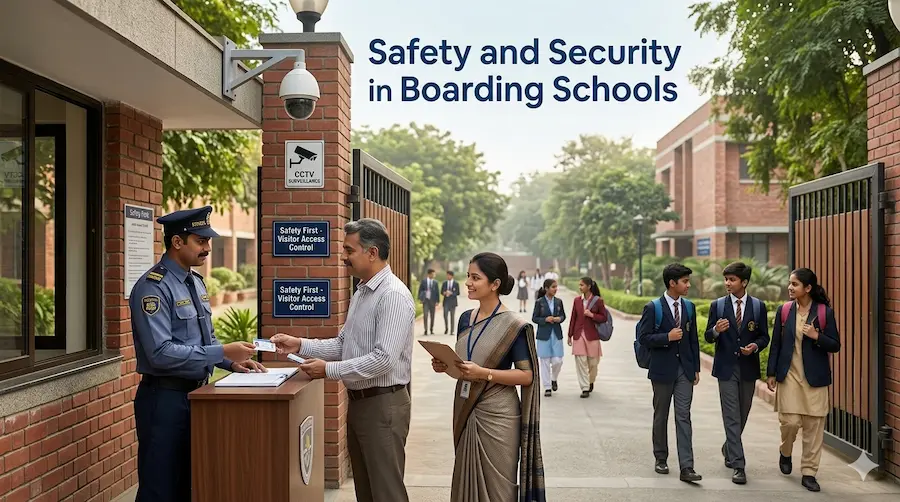
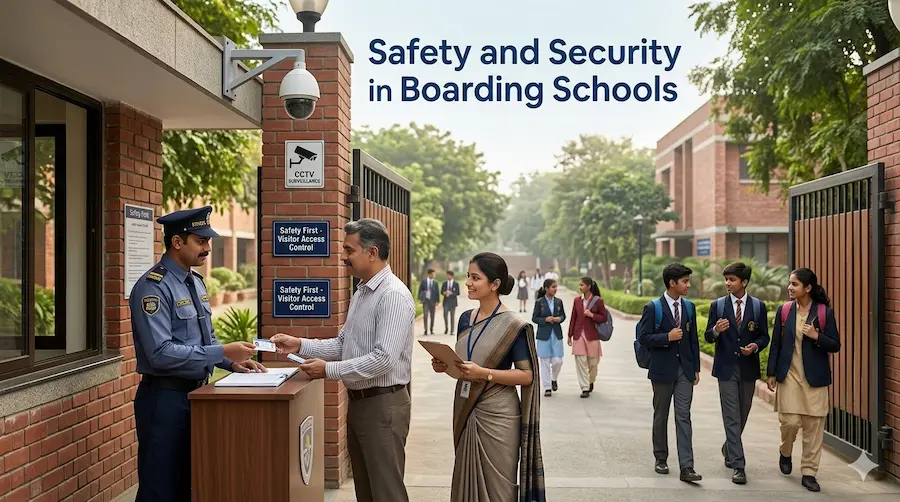
Layer 1: Campus Entry & Physical Security
This is the visible part, but still important.
What to check:
- Controlled entry and exit points
- Visitor log system
- Security guards (24×7)
- Boundary walls and fencing
Practical test:
Ask:
“Can any outsider enter without verification?”
If the answer is unclear, it’s a red flag.
Layer 2: CCTV Surveillance (But Used Properly?)
Many schools say “CCTV enabled.” That alone means nothing.
What actually matters:
- Coverage areas (corridors, entry, common zones)
- Monitoring system (live monitoring vs recording only)
- Data storage duration
- Access control to footage
Important note:
CCTV should NOT be inside:
That indicates privacy violation.
Layer 3: Hostel Supervision (Most Critical)
This is where real safety lies.
Key questions parents should ask:
- Is there a warden present at night?
- What is the staff-to-student ratio?
- Are boys and girls hostels strictly separate?
- Is there a surprise inspection system?
Real insight:
Many incidents happen not due to lack of CCTV, but lack of active supervision.
(Also read: Hostel Life in Boarding Schools for detailed living conditions)
Layer 4: Night Safety System
This is something most parents never ask.
Check for:
- Night roll call (attendance check)
- Restricted movement after lights off
- Emergency contact access
- Staff available overnight
Red flag:
If students can move freely at night without monitoring.
Layer 5: Medical Facilities (Highly Underrated)
This is where good schools stand out.
Must-have facilities:
- On-campus infirmary
- Trained nurse (24×7 ideally)
- Doctor on call or visiting doctor
- Tie-up with nearby hospital
Ask this directly:
“What happens if a child falls sick at midnight?”
The answer will reveal the real system.
Layer 6: Emergency Response System
Emergencies don’t give warning. Schools must be prepared.
Look for:
- Fire safety systems (extinguishers, drills)
- Evacuation plan
- Disaster preparedness
- Staff training
Practical tip:
Ask if mock drills are conducted regularly.
Layer 7: Student Movement Control
Safety also means knowing where the child is.
Good schools maintain:
- Entry-exit tracking
- Permission system for outings
- Staff escort for junior students
Weak system sign:
Students moving without accountability.
Layer 8: Digital Safety (New-Age Concern)
This is often ignored but increasingly important.
Check:
- Internet usage control
- Device usage rules
- Cyber safety awareness
Children today face risks beyond physical campus.
Emotional Safety (Most Ignored but Most Important)
A child can be physically safe but emotionally disturbed.
Watch for:
- Bullying policies
- Anti-ragging system
- Counseling support
- Teacher approachability
Ask students directly:
“Do you feel safe here?”
Their answer matters more than brochures.
Common Safety Myths Parents Believe
Myth 1: Big campus = safe campus
Not always. Bigger campus needs stronger monitoring.
Myth 2: High fees = better safety
False. Many mid-range schools have better systems.
Myth 3: CCTV means everything is safe
CCTV is passive. People ensure safety.
Real Red Flags Parents Should Never Ignore
- Restricted access during campus visit
- No clear answer about night supervision
- Poor hygiene in hostel
- No medical staff visible
- Students looking uncomfortable or fearful
Practical School Visit Checklist
During visit, do this:
- Check security gate system
- Observe hostel entry control
- Visit infirmary
- Ask about emergency protocol
- Talk to students privately
This gives real clarity beyond marketing.
How Safety Connects to Overall Campus Life
Safety is one part of the bigger system.
To fully understand boarding school experience, also explore:
- Hostel living conditions
- Daily routine
- Sports and activities
(Read: Life Inside a Boarding School Campus)
FAQs
1. Are boarding schools safe in India?
Yes, most reputed schools maintain strong safety systems, but verification is important.
2. Is CCTV enough for safety?
No. Active supervision and staff presence matter more.
3. What is the most important safety factor?
Hostel supervision and staff availability.
4. Do schools provide medical care at night?
Good schools have 24×7 support or hospital tie-ups.
5. How can parents verify safety?
By visiting campus, asking questions, and talking to students.
6. Is bullying common in boarding schools?
Not common in well-managed schools with strict policies.

Comments (0)
Leave a Comment