
Looking for the best boards for competitive exams India 2026? This ultimate parent guide compares CBSE vs ICSE vs IB for JEE NEET success and helps you pick the perfect curriculum for your child.
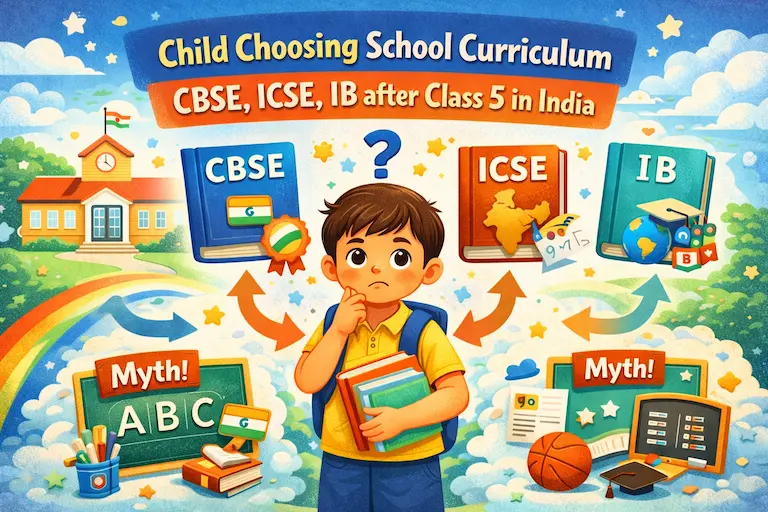 Choosing the right curriculum after Class 5 is an important decision. At this stage, children move from primary education to deeper academic learning. The curriculum selected now can shape their study habits, career direction and overall academic foundation.
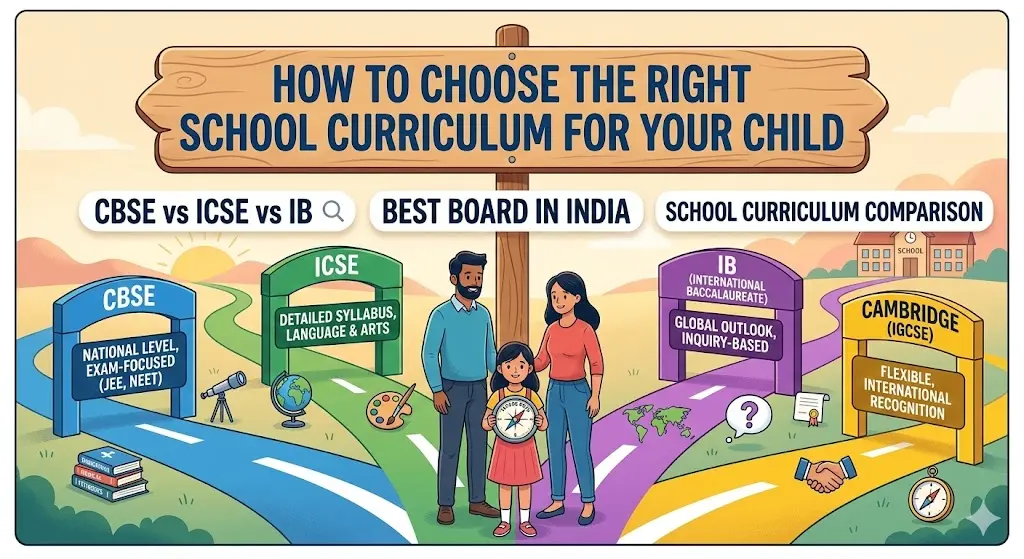
Many parents get confused between boards like CBSE, ICSE, IB and IGCSE. Each curriculum follows a different teaching approach and prepares students differently.
If you are still exploring curriculum options, it is helpful to first understand how school boards differ and what suits your child’s learning style. A detailed overview is available in our guide on How to Choose the Right School Curriculum for Your Child.
Class 6 marks the beginning of middle school education. Subjects become more detailed and analytical thinking starts developing.
A good curriculum helps children:
Build strong foundations in mathematics and science
Improve communication and language skills
Develop problem-solving ability
Prepare for higher education paths
For example, a student planning to appear for engineering or medical entrance exams in India may benefit from CBSE, while a child aiming for global universities may prefer IB or IGCSE.
After Class 5, most schools offer one of the following boards.
CBSE is the most widely followed curriculum in India.
Strong focus on mathematics and science fundamentals
Standardized syllabus across India
Ideal for competitive exams such as JEE and NEET
Large number of schools follow this board
Students planning careers in engineering, medicine or government examinations.
Parents comparing boards often explore differences between national and international boards. A detailed comparison is covered in CBSE vs ICSE vs IB.
ICSE is known for its detailed and balanced academic structure.
Strong emphasis on English language and literature
Balanced focus on science, arts and humanities
Encourages conceptual learning and analytical thinking
Students who enjoy writing, reading and deeper subject understanding.
Parents often compare ICSE with international programs. A detailed comparison is available in CBSE vs IB.
IB follows a global learning approach that focuses on inquiry and research.
Encourages critical thinking and independent learning
Globally recognized curriculum
Project-based learning methods
Students planning higher education abroad or those who prefer conceptual and creative learning.
IGCSE is another internationally recognized curriculum offered by Cambridge.
Flexible subject choices
Global academic standards
Strong focus on practical understanding
Students looking for international exposure and flexible academic pathways.
Instead of choosing a board only based on popularity, parents should evaluate several factors.
Some children perform well in structured environments while others prefer creative learning.
For example:
Analytical learners may adapt well to CBSE.
Language-oriented students may prefer ICSE.
Independent learners often enjoy IB or IGCSE.
Long-term plans also influence curriculum choice.
Engineering or medical entrance exams → CBSE
Balanced academics and language development → ICSE
Global universities → IB or IGCSE
Parents focused on exam preparation can explore our guide on Best Board for Competitive Exams in India.
The school’s teaching quality matters more than the board itself.
Parents should evaluate:
Teacher experience
School infrastructure
Extracurricular opportunities
Student development programs
International curriculums such as IB and IGCSE generally have higher fees. Parents should also consider the availability of schools in their city.
There is no single curriculum that suits every child.
In general:
CBSE works well for competitive exam preparation.
ICSE provides a strong language and academic foundation.
IB and IGCSE focus on global education and research skills.
The best approach is to understand your child’s interests and choose a school that supports their learning style.
If you want a broader understanding of how curriculums differ, read our detailed guide on How to Choose the Right School Curriculum for Your Child.
Selecting the right curriculum after Class 5 is a major step in a child’s educational journey. The decision should be based on the child’s strengths, learning preferences and long-term goals.
Parents should visit schools, speak with teachers and review the teaching approach before finalizing a curriculum.
A thoughtful choice today can build a strong academic foundation for the future.
CBSE, ICSE, IB and IGCSE are all good options. The best board depends on the child’s learning style and future academic goals.
CBSE is often preferred for competitive exam preparation, while ICSE offers deeper subject understanding and stronger language skills.
Yes. IB focuses on research, creativity and critical thinking. It is particularly useful for students planning higher education abroad.
CBSE is generally considered the most suitable board for exams like JEE and NEET because the syllabus aligns closely with these exams.
Looking for the best boards for competitive exams India 2026? This ultimate parent guide compares CBSE vs ICSE vs IB for JEE NEET success and helps you pick the perfect curriculum for your child.
Changing the board after Class 5 is possible but should be done carefully. Parents should evaluate curriculum differences and ensure the child can adapt smoothly.
Comments (0)
Leave a Comment